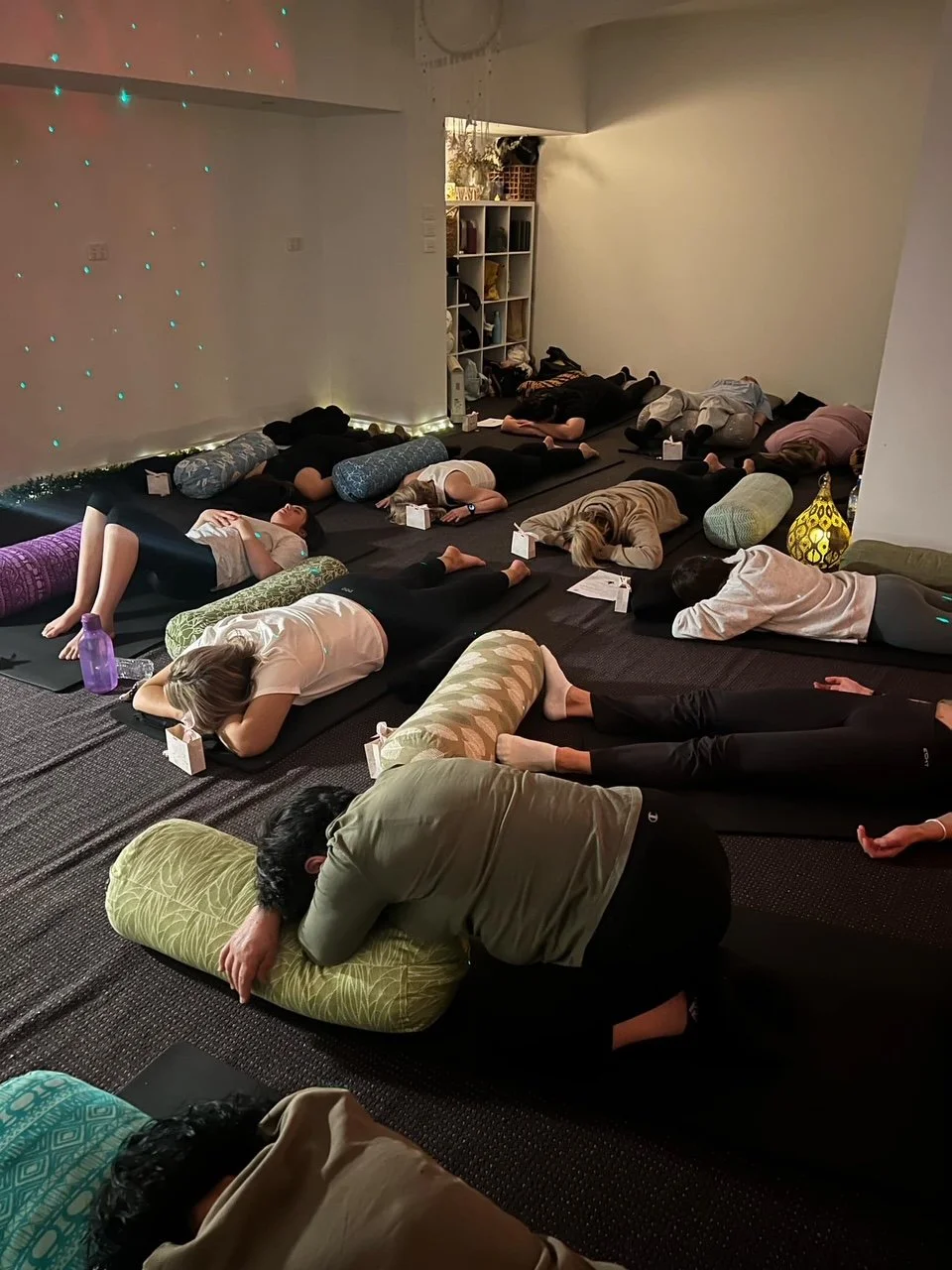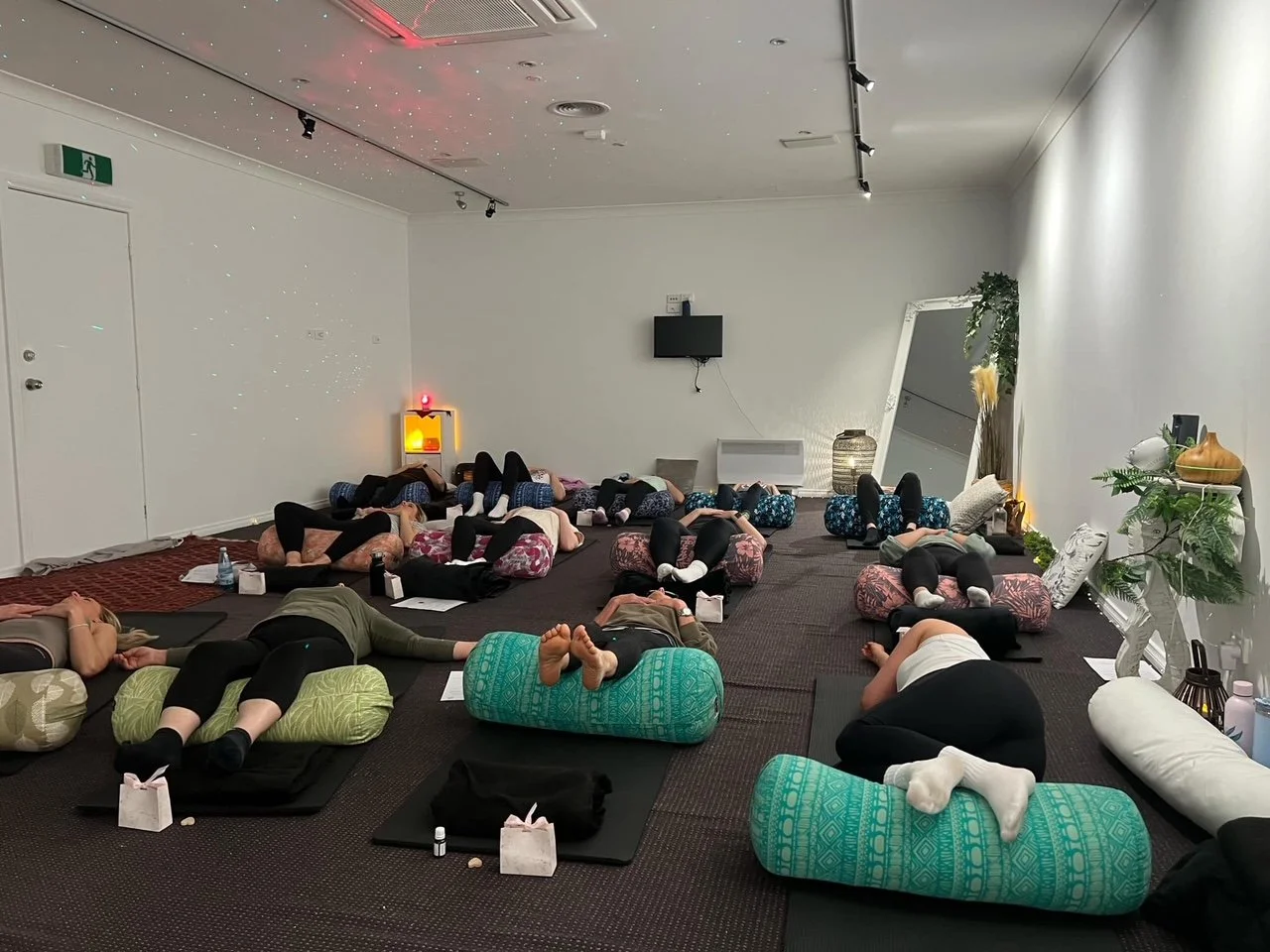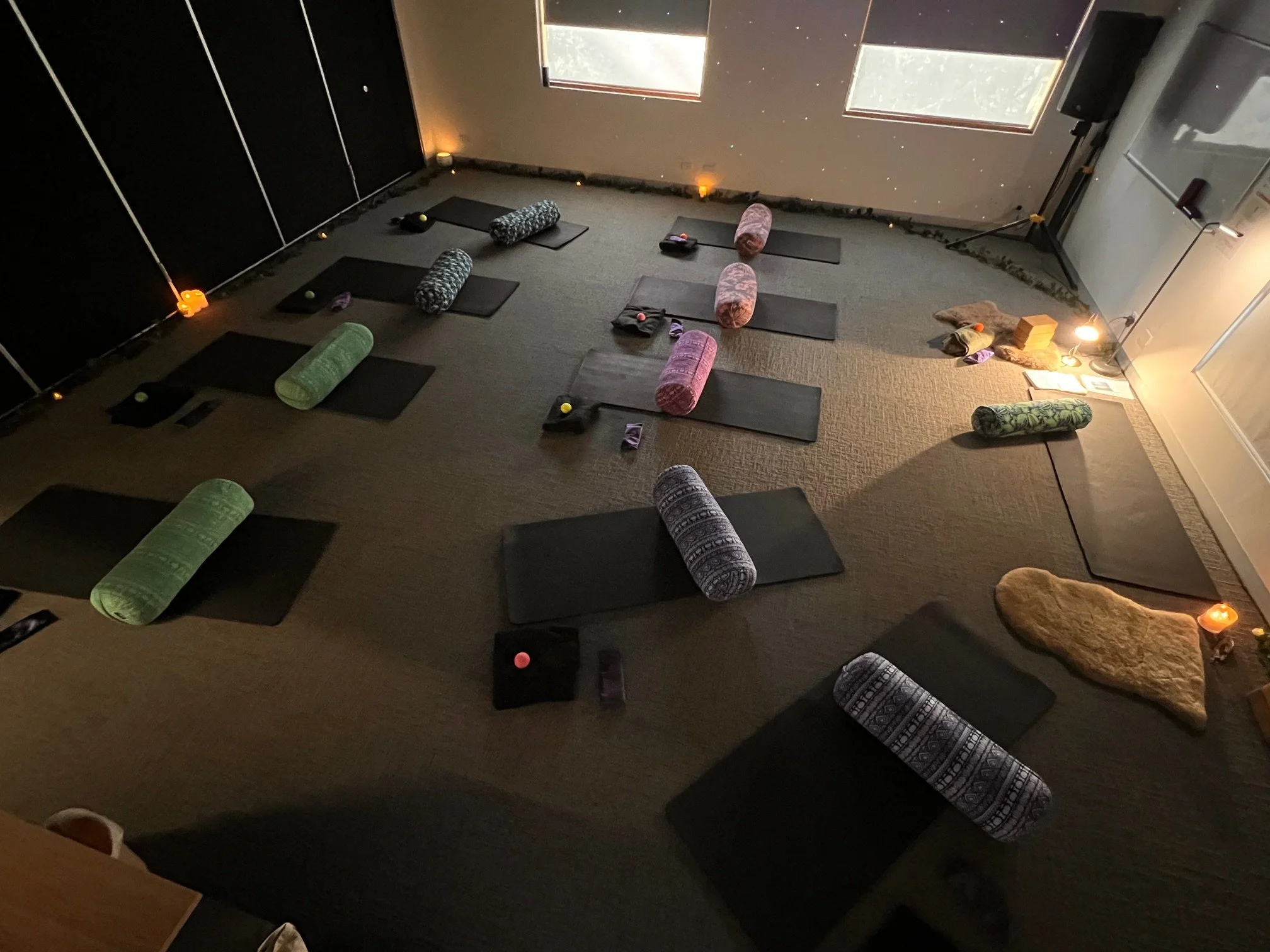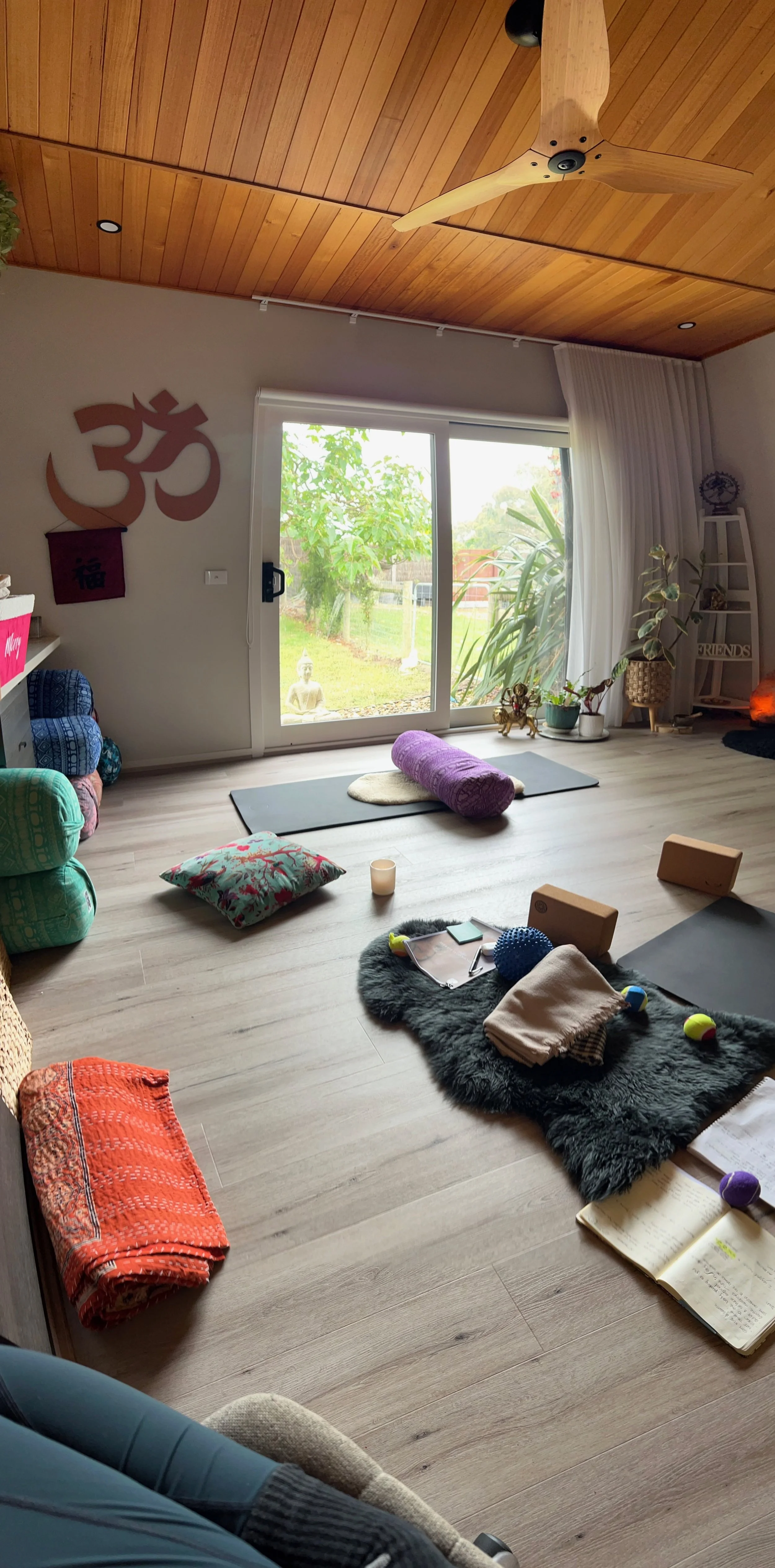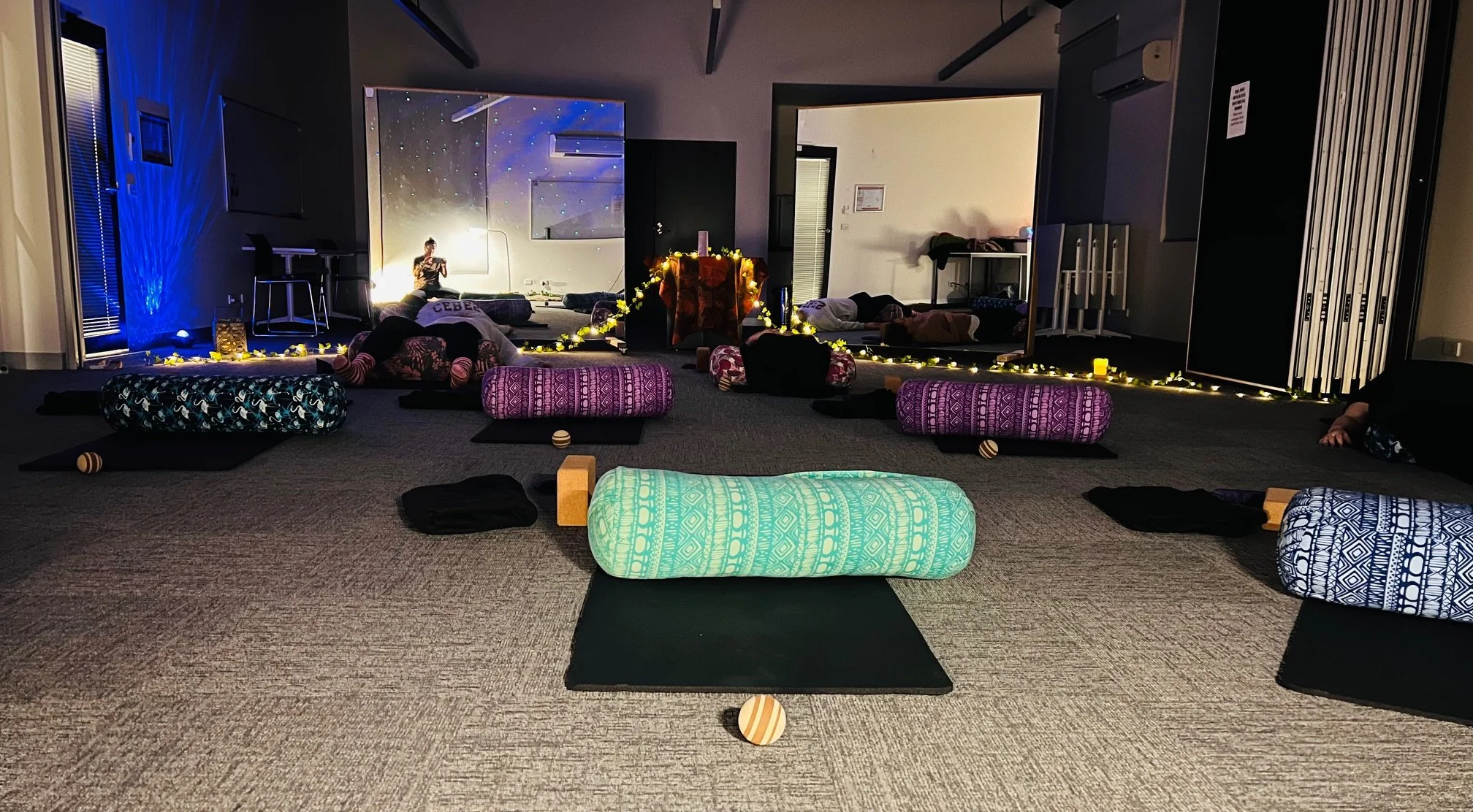
Why YIN?
A little more about Yin, meditation & why we need both…
The stillness of Yin is like a doorway to meditation — and sometimes, less really is more.
Instead of pushing harder or going further, we do less — and give the body time to respond.
As the body becomes quieter, we begin to notice more. Our breath. Sensations in the body. Our thoughts. The urge to move, react or distract ourselves.
And this is meditation. Not trying to empty the mind or stop our thoughts, but learning to notice without immediately needing to respond.
Where the body meets the mind
Physically, Yin works with our fascia and connective tissues through longer, slower holds. But while the body is receiving the physical benefits of Yin, the stillness gives us an opportunity to practise meditation.
We use the body to find stillness — and the stillness gives us a chance to meet ourselves.
And just so you know, meditation doesn’t have to mean sitting perfectly still, cross-legged, desperately trying not to think. It can simply be learning to notice.
That’s where I think Yin and meditation work so beautifully together.
We slow the body down enough to begin noticing the mind.
And over time, perhaps we get a little better at creating that space outside the Yin room too.
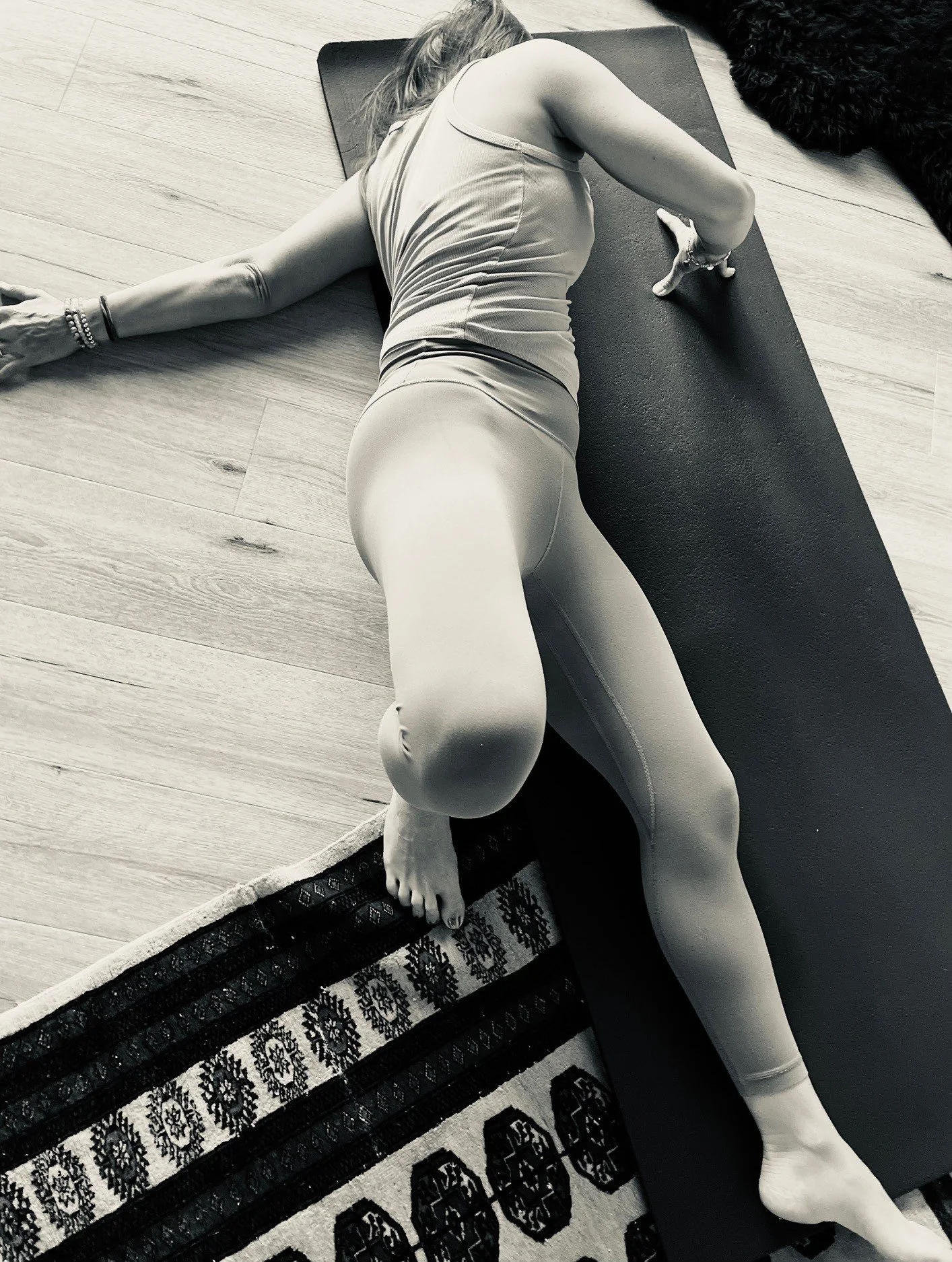
Why should you try Yin?
Because sometimes what we need most is something completely different from what we're used to doing.
We spend so much of our lives moving, thinking, planning and responding to the demands of everyday life. Even the things we do to look after ourselves can become another thing to achieve.
Yin offers something different. And I think that's what makes this practice so incredibly valuable.
After more than two decade of practising Vinyasa yoga, I discovered Yin and began to appreciate just how much there was to learn from slowing down.
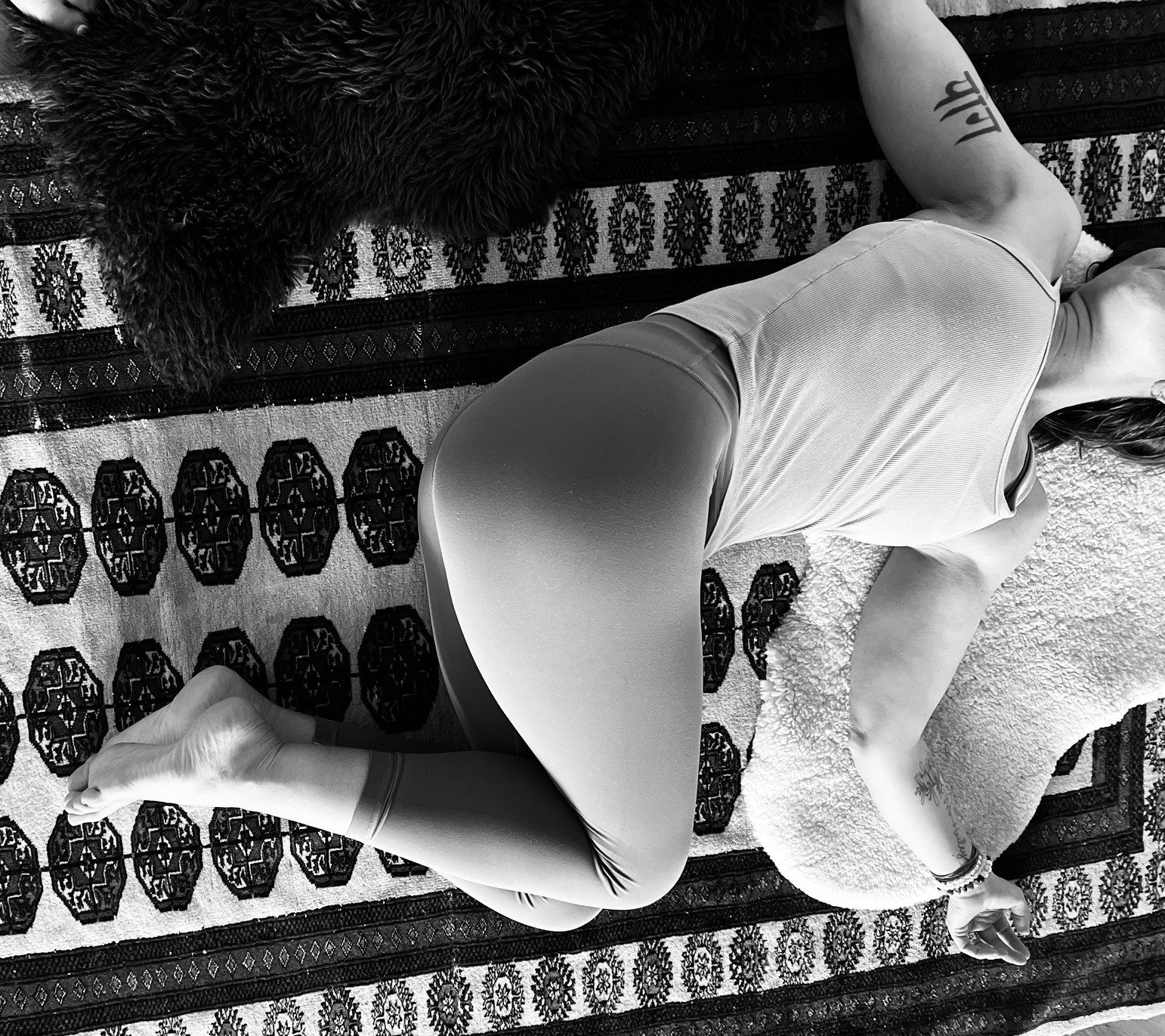
In Yin, we spend several minutes in each shape. There's no rushing to the next pose, no complicated sequence to follow and certainly no perfect shape to achieve.
Instead, we have time. Time to notice how our bodies feel, how we breathe and just how busy our minds can be when we finally become still.
And this is where the practice becomes so much more than stretching.
We begin to develop patience, awareness and a willingness to stay with ourselves rather than constantly looking for the next distraction. It's also a wonderful way to explore meditation, particularly if you've always found sitting still difficult.
Physically, Yin offers a different approach to movement and mobility. It's a lovely complement to more active forms of exercise, whether that's yoga, walking, golf, running or working out at the gym.
And you don't need to be flexible. Yin is for everybody. We adapt the shapes to suit our individual bodies, rather than trying to make our bodies fit the shapes.
Variations aren't something we add to Yin — they're how Yin meets real bodies.
For me, that's part of what makes Yin so special. It's a practice that continues to teach us, physically and mentally, no matter how long we've been doing it.
And you don't need an hour every day to experience it. Sometimes even one shape in the morning is a lovely place to begin.
And then there's our remarkable fascia...
Yin has a particular focus on our deeper connective tissues, including fascia, ligaments and tendons. Through longer-held shapes, we apply gentle, sustained stress to these tissues, giving our bodies time to respond.
Fascia is the connective tissue network that surrounds and supports structures throughout our bodies. It's living, responsive and adaptable, and plays an important role in how we move.
Fascia researcher Robert Schleip has described fascia as:
“It is beyond any doubt our richest sensory organ.”
And that’s one of the things I love about Yin — we’re not just stretching. We’re learning to feel and notice what’s happening within us.
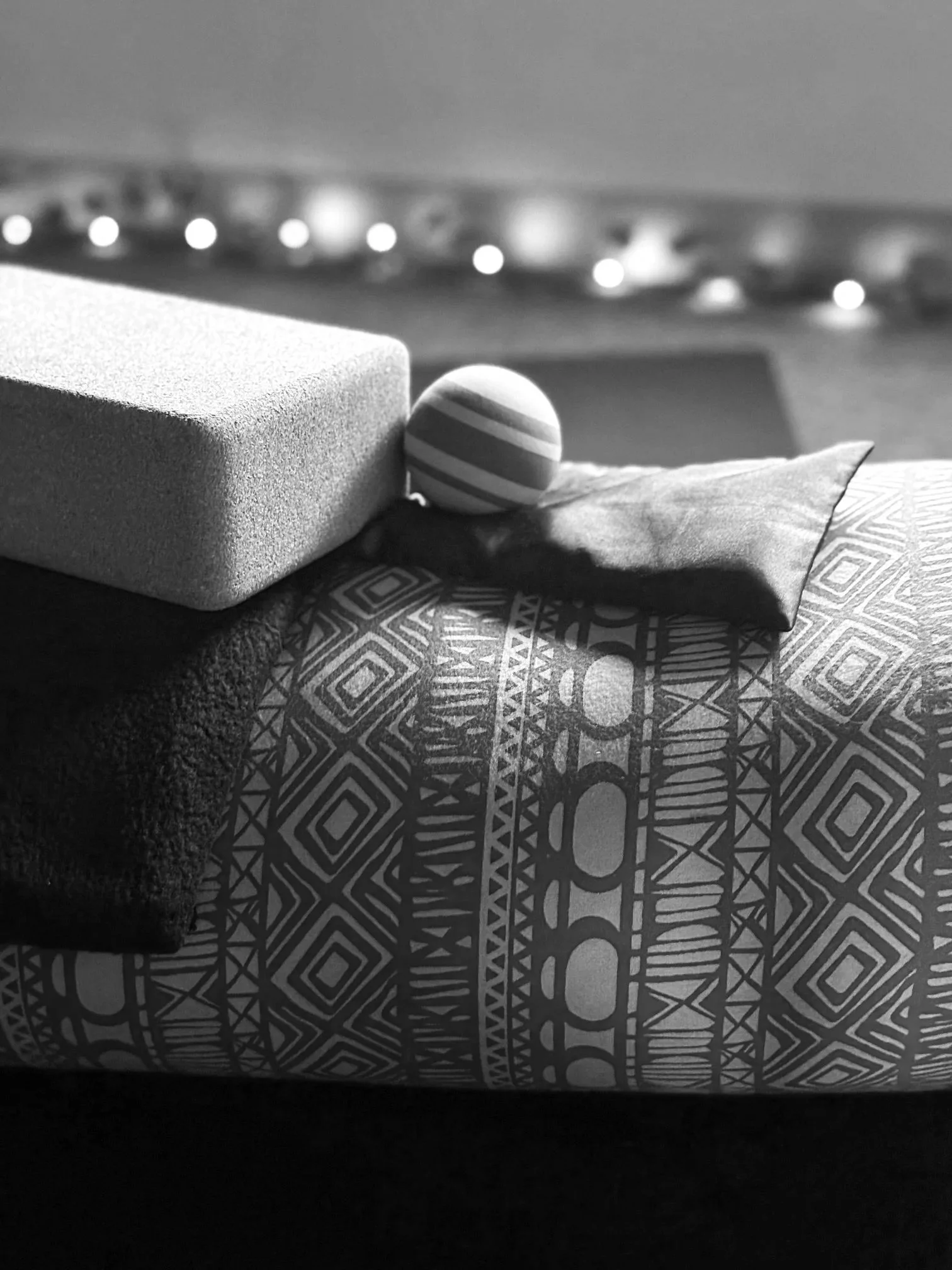
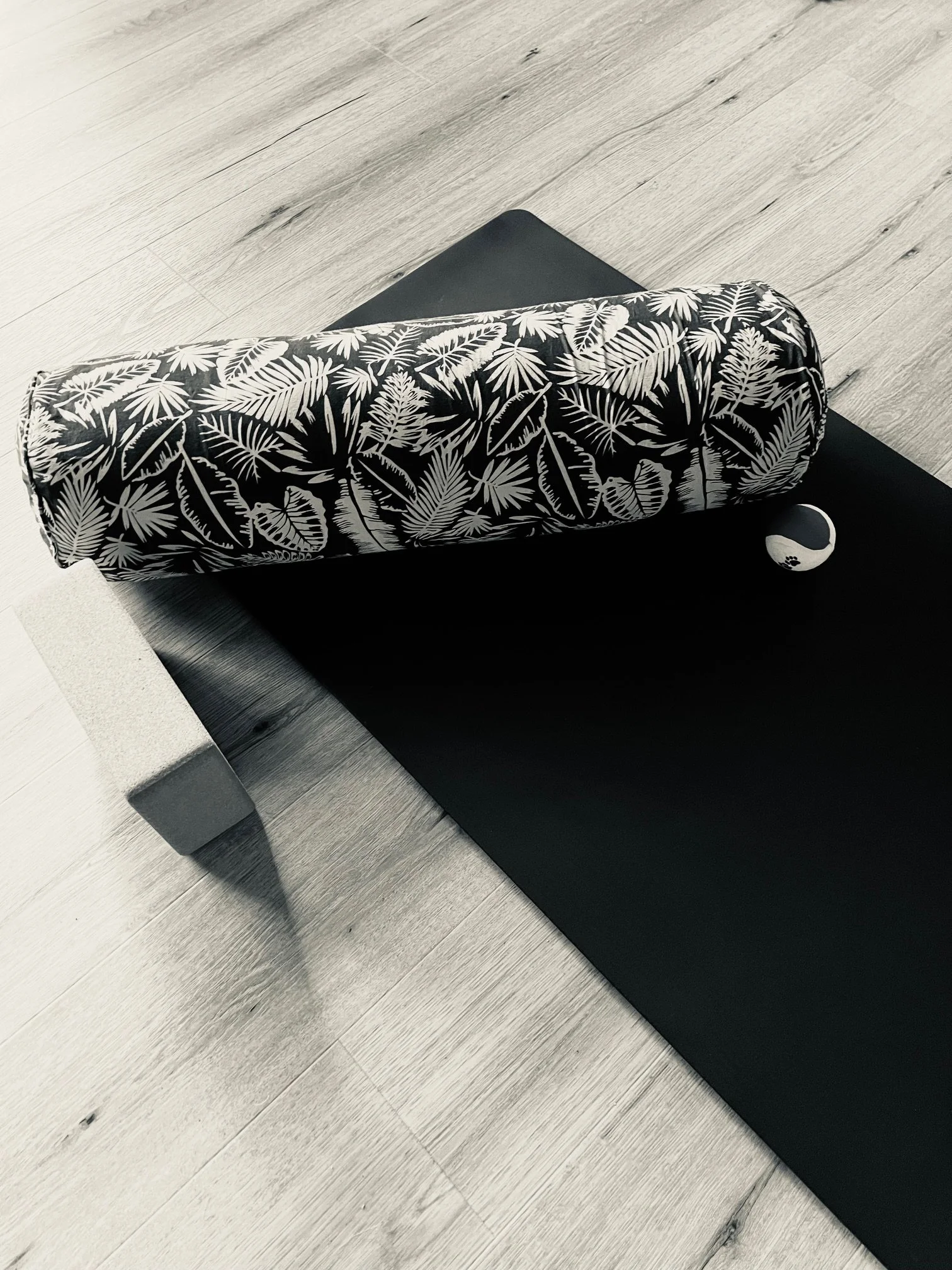
MYOFASCIAL RELEASE IN YIN
What is it?
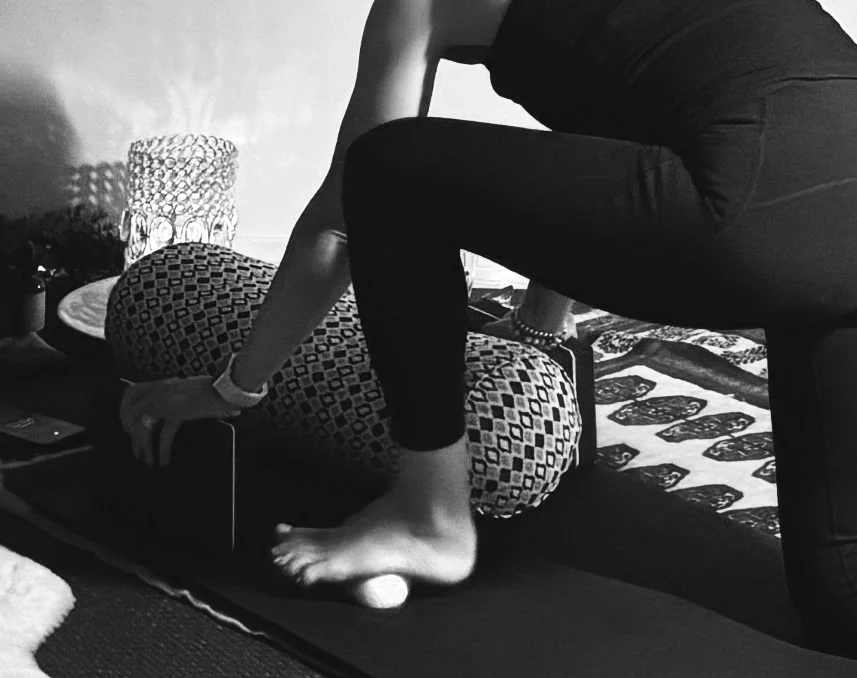
Myofascial release is a complementary practice to Yin Yoga. It uses simple props such as balls and blocks to apply gentle pressure and movement to different areas of the body and fascia.
I often use this alongside Yin because you are in control. You decide where the prop goes, how much pressure feels right and when enough is enough. It’s about exploring your own body rather than forcing it.
The pressure and movement can help increase local circulation, reduce feelings of muscle tightness and encourage the layers of tissue to move and glide more freely.
We’re essentially giving the tissue a little input before becoming still.
Pressure → movement → circulation → then stillness.
Think of it as a little self-massage with a Yin Thing twist. 😉
REVIEWS
“These classes are a little slice of bliss and a beautiful time for self- caring. Diana’s classes are wonderfully restorative and healing. And a little bit magical ”
“Di’s Classes are a space that allows me to focus on me. Yin has improved my flexibility and helped me to let go of any tension that i am carrying. I feel so much more connected to my mind and body. I always leave feeling renewed and recharged. What a beautiful way to care for yourself ”
“I’ve been doing Yin with Di for over a year now and it is the most enjoyable hour of my week. Not only do I give my body a chance to recover with deep stretches but it also gives me the chance to disconnect and slow down my mind.
I am currently 37 weeks pregnant and have managed to maintain my gym and active life style the whole way through my pregnancy and Yin has played a huge part in that! The fact i can still (semi) easily move into sleeping swan and other yoga positions at this point amazes me. Sad that i have to have some time off, but i will be back post birth!! ”